An optimistic read of the Hantavirus outbreak

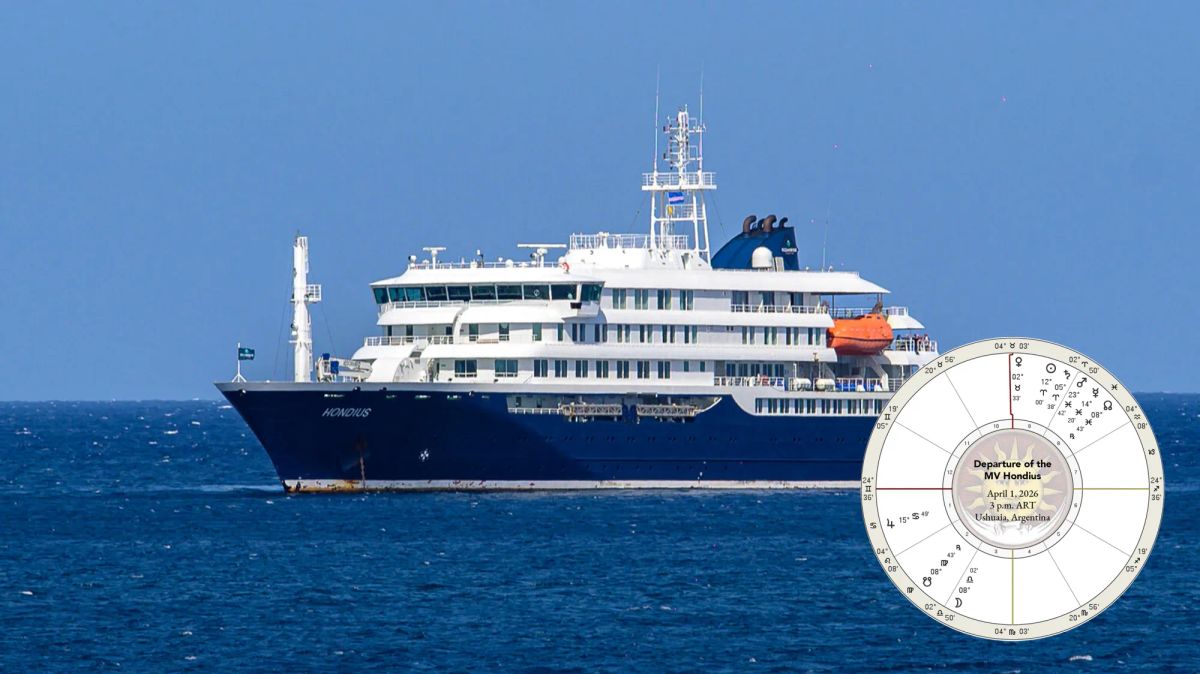
On April 1, 2026, the Dutch expedition cruise ship MV Hondius departed Ushuaia, Argentina – the southernmost city in the world – carrying 196 passengers of 23 nationalities and a crew of 72, bound for Antarctica and a series of remote South Atlantic islands. Within ten days, a passenger was dead. By the time the ship reached Saint Helena in late April, an outbreak was confirmed: the Andes strain of hantavirus.
Hantavirus is a family of viruses carried by rodents and transmitted to humans primarily through contact with infected animals or their traces. The Andes strain is the only member of this family known to pass between people, though this remains rare and typically requires close or sustained contact. Mortality is high, but infectivity is low. Public health authorities, including the WHO, have consistently assessed the risk of wider epidemic as low.
The index case – a Dutch national who boarded with his wife – had spent the preceding four months on a road trip through Chile, Uruguay, and Argentina, including regions where the virus is endemic. He is believed to have brought the infection aboard. As of this writing, three passengers have died, eight cases have been identified, and the ship is making for Tenerife, where passengers are being repatriated to their home countries.
Departure chart for the MV Hondius
The chart is cast for Ushuaia at 3pm on April 1, the moment the MV Hondius set sail.
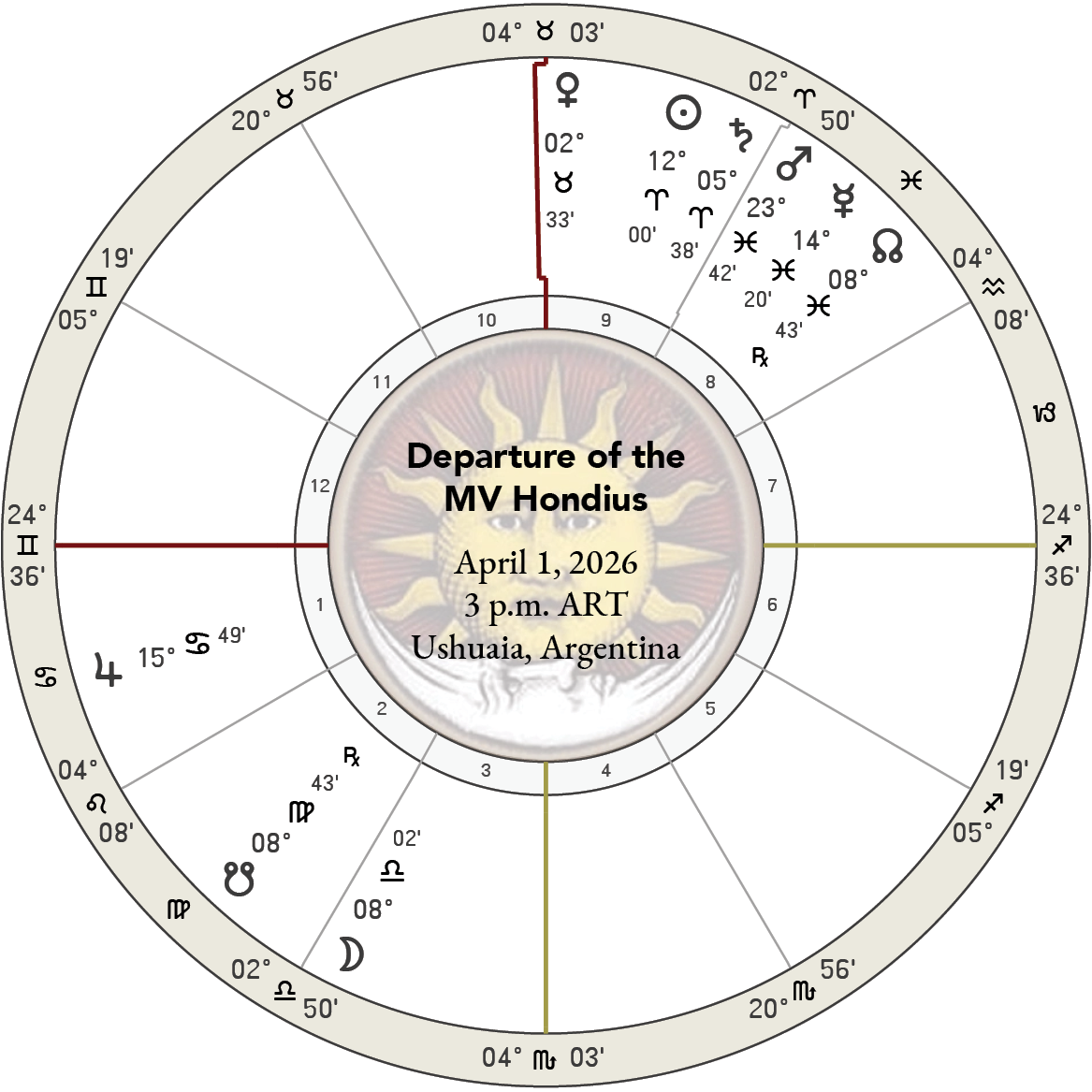
Gemini rises, a human sign, and the Andes virus is notable precisely for its capacity – rare among hantaviruses – to cross from other species to people. Mercury rules Gemini, and both the sign and its ruler carry associations with the hands; the primary route of hantavirus transmission is contact, often incidental, with surfaces or material carrying traces of infected rodents. As far as we know, the virus came aboard through touch.
The mutable quality of the rising sign reflects another feature of this outbreak that has complicated the public health response: the passengers dispersed in multiple directions before the situation was understood, each carrying their own potential exposure history, making the task of contact tracing difficult.
Jupiter, ruling the 6th house of illness and disease, is placed in the ascendant in Cancer, descriptive of illness arising and discovered at sea. This is reinforced by the chart's ruler Mercury, and by Mars, both in a water sign.
Mercury, ruling the ascendant, is in the 8th house of death and applying to the 6th-ruler by trine – an easy and swift aspect, indicating susceptibility. Mercury is in the final quarter of its phase and near setting, which points toward the elderly: the first to fall seriously ill and die was a man of seventy. The Moon's recent separation from Saturn adds to this picture of age vulnerability to more matured communities.
Mars, the morbificant planet
The chief malefic in this chart is Mars. Placed in the 8th house at 23° Pisces, it squares the ascendant within a degree – a tight, partile contact with the rising degree that frames the entire event.
Mars is the natural significator of acute illness (diseases that arrive quickly), and carry high mortality. The ascendant-ruler Mercury and this afflicting malefic are traveling together in the 8th house of death.
Saturn has a share in the picture too, given the Moon's recent opposition to it, but the near-exact square of Mars to the ascendant, combined with Mercury's close proximity to Mars in the sky, draws somewhat more attention.
Mars made its ingress into Pisces on March 2, a month before the MV Hondius departed. Cast for Ushuaia, the ingress chart is worth attention. Mars rules both the ascendant and the 8th house, and at the moment of ingress it stood at the midheaven, with the Moon in partile opposition from the 4th – trouble and danger at sea, with the 8th-ruler elevated and the Moon marking it from the angle of endings.
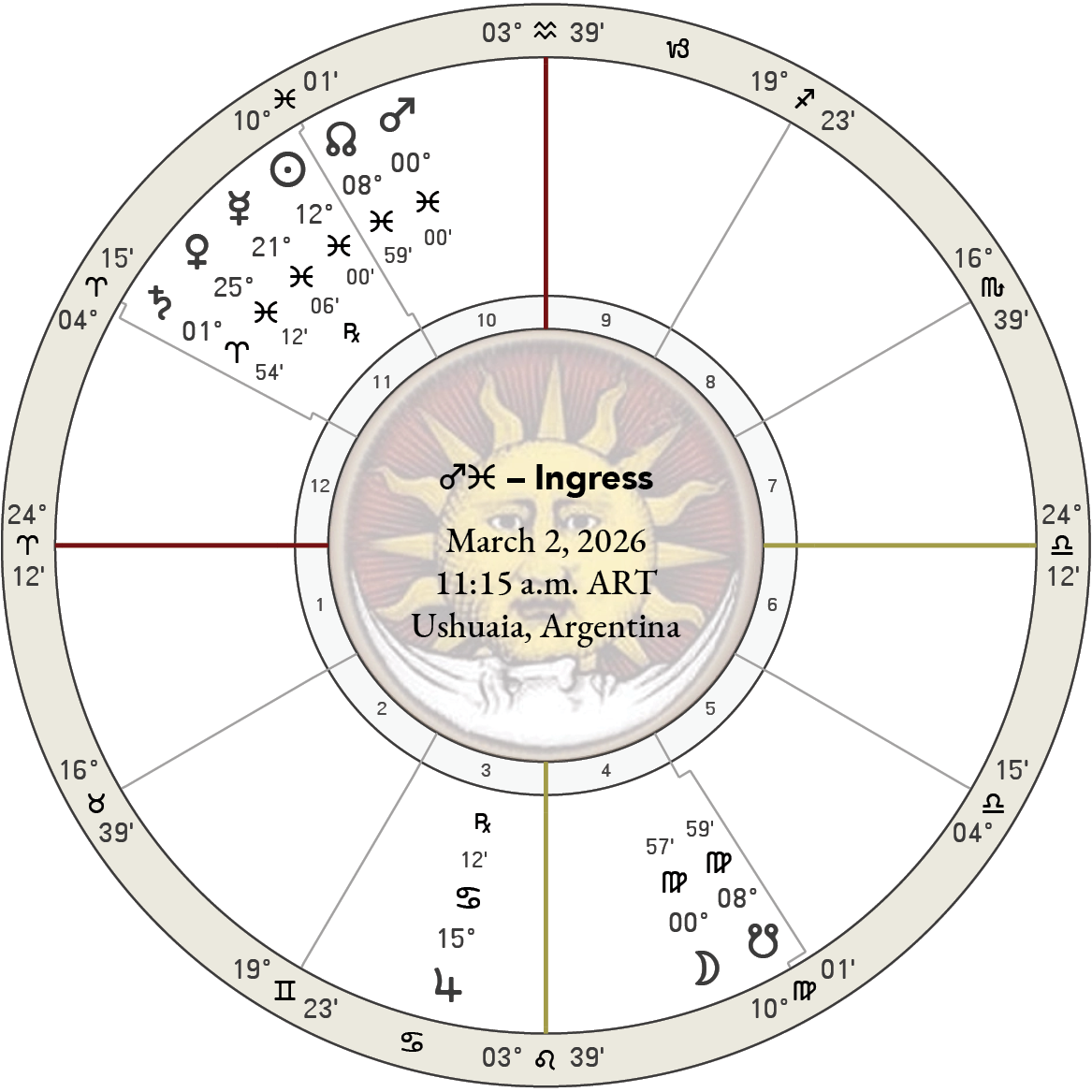
At Mars' ingress, the 6th-ruler is Venus at 25° Pisces, in the Mars-ruled term running from 21° 00' to 25° 59' of that sign. By the time the ship departed on April 1, Mars had moved from 0° to 23° Pisces – within the same term as Venus and less than 2° from a transiting conjunction.
Venus ordinarily rules pleasant things, but a planet's natural significations yield somewhat to the role it plays within larger cycles. At the Mars ingress into Pisces, Venus ruled the 6th – and so, whilever Mars remained in Pisces, whenever Mars afflicts, Venus will carry illness as part of its meaning. This, I think, explains why such a well-placed benefic was found on the midheaven at the start of such a deadly journey.
Thoughts on timing
Returning to the Mars ingress chart for a moment: at the time of Mars' entry into Pisces on March 2, the Moon was 11° from its opposition to the Sun.
Four weeks later, the departure chart shows the Moon again building toward a major aspect: a square to Jupiter, with the Sun also applying to Jupiter from Aries. Jupiter, in Cancer, disposited all the Pisces planets in the Mars ingress chart, and in the departure chart ruled the 6th house of illness. The Moon is short 7° from perfecting that square.
These numbers might offer a hint at timing. Eleven degrees separated the Moon from its next major aspect at the Mars ingress. Four weeks passed. Seven degrees now remain until the Moon reaches Jupiter. Reading each degree as a week, seven weeks from the April 1 departure lands in the third week of May – eleven weeks from the ingress itself. The math agrees across both charts.
Both luminaries applying to Jupiter, the 6th-ruler, could mark a point of escalation. I suspect, though, it will coincide with containment. Jupiter is a benefic, and the luminaries are life-giving; hantavirus spreads with difficulty, and public health authorities have consistently rated the risk of widespread epidemic as low.
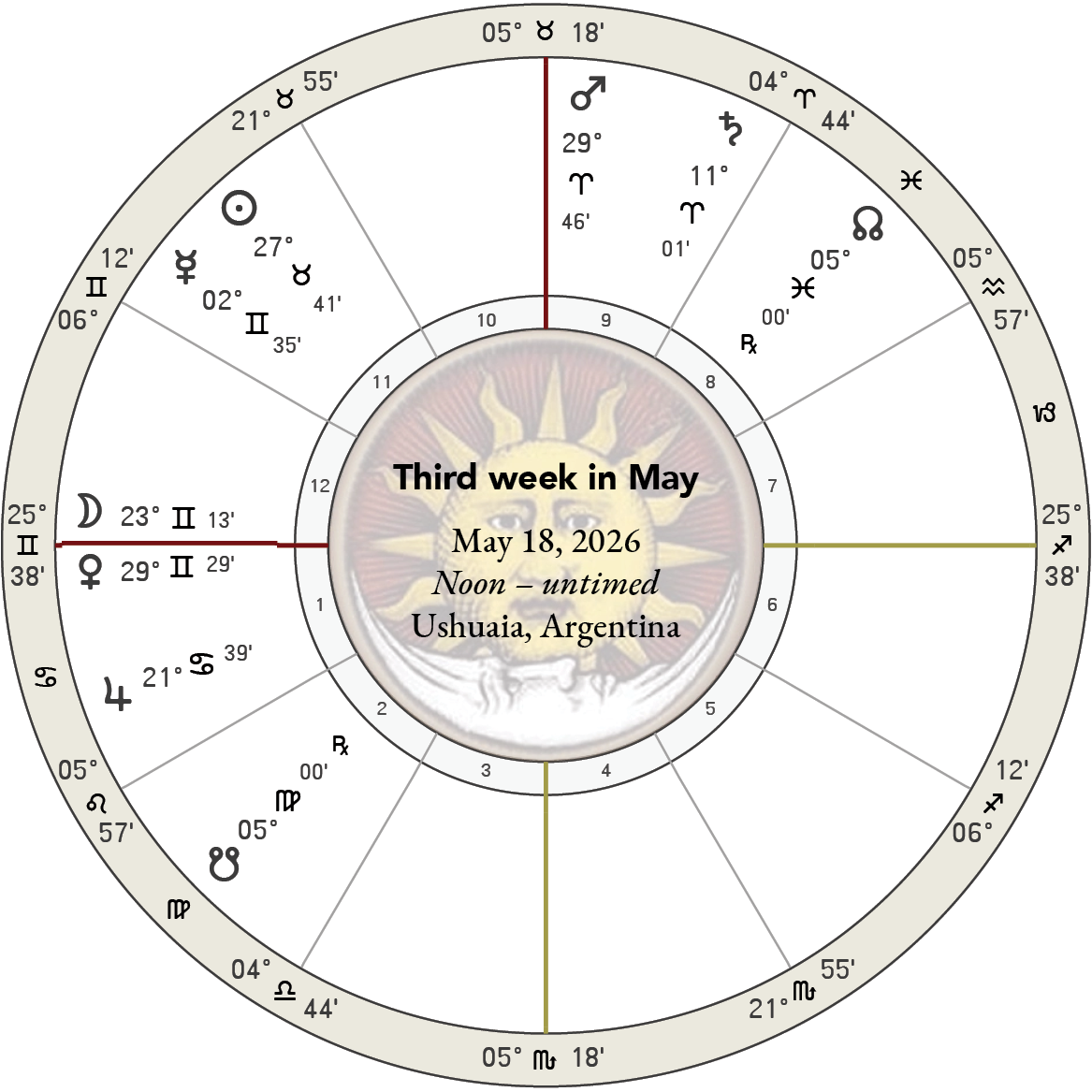
The third week of May
On May 18, eleven weeks to the day from the Mars ingress, Venus and Mars change signs simultaneously, keeping in sextile with one another – Venus at 0° Cancer, Mars at 0° Taurus. Venus thus arrives in sextile to its radical position on the midheaven of the departure chart, while Mars transits the midheaven itself.
The same day, Moon will pass over the departure chart ascendant in late Gemini and move into Cancer, joining Venus. As it moves through that sign will sextile Mars, square Mars, and then translate light from Jupiter to the Sun at the end of the sign, touching all the main significators of interest. Mercury, for its part, will have returned to Gemini – its own sign, and the sign of the ascendant of the departure chart.
I hope to read this as the closing of the cycle, and the general exit from this issue being a main headline. Mercury at home in Gemini suggests a return to something like ordinary conditions. The Moon translating light between Jupiter and the Sun, with Venus present in Cancer, has a settling quality.
My expectation is that by around May 18, the outbreak will have reached its resolution, or confidence about final resolution might be in sight – passengers repatriated, cases contained, the public health picture stabilized, etc.