Brazil's run-off election

Forecasted winner: Luiz Inácio Lula da Silva
10:05 am – Brazil chooses its president today in a runoff between two men who took nearly 93 percent of the first-round vote between them. In the October 4 first round, Senator Flávio Bolsonaro of the Liberal Party won 47.03 percent of valid votes to President Luiz Inácio Lula da Silva’s 45.16 percent, a gap of roughly 2.2 million votes. eldesconcierto
Lula is the known quantity. He was president from 2003 to 2010 and returned in 2023 after beating Jair Bolsonaro in the 2022 runoff. At 80, he is running for a fourth term. His opponent is that former president’s eldest son. Flávio says his government would be a “Bolsonaro 2.0”, and he has pledged a crackdown on crime and drug trafficking along with tax cuts. Busca interna do iBahia +2
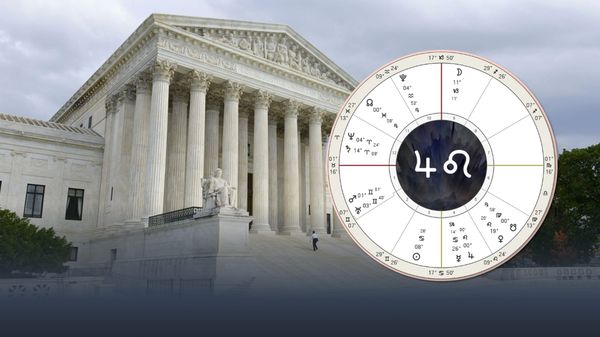
In September 2025 Brazil’s Supreme Court sentenced Jair Bolsonaro to 27 years and three months for plotting a coup after his 2022 defeat, making him the first former president convicted of that crime. The plot included plans to assassinate Lula. The court also barred him from office until 2033. He began serving the sentence after he was caught tampering with his ankle monitor using a soldering iron, and he has since been held under house arrest while serving it. Flávio is the family’s stand-in on the ballot. Finger pushing +3
Donald Trump has been in this race from the start. In July 2025, while the trial was underway, Trump imposed tariffs on Brazil and sanctioned the Supreme Court justice overseeing the case. It backfired: Lula got a popularity bump from opposing the 50 percent tariffs, which observers compared to the effect that helped Mark Carney win in Canada. This June, after Flávio visited the White House, Washington proposed new 25 percent tariffs, and Lula branded them “TariFlávio” and accused his rival of betraying the country by lobbying for them. Flávio then went to Washington and asked the U.S. trade office not to impose the tariffs, arguing they helped Lula. He did get one win: Trump designated Brazil’s two largest drug gangs as terrorist organizations, a cause of the Brazilian right. us tariffs strengthen lula against bolsonaros son in upcoming elections +4
The larger story is resources. In January 2023, General Laura Richardson, then head of U.S. Southern Command, laid out on record why the Pentagon cares about South America. She cited the lithium triangle of Argentina, Bolivia and Chile, which she said holds 60 percent of the world’s lithium, along with Venezuela’s oil. She also named the Amazon as the lungs of the world and noted the region holds 31 percent of the world’s fresh water, and she described a Zoom call with U.S. ambassadors and lithium company executives about the triangle. The context was competition with China. At the time it read like a general thinking aloud. Three years later it reads more like a plan. Plans for US Imperialism 2.0 predate Trump 2.0 +2
The instrument developed for this plan is the Shield of the Americas, a security alliance Trump launched in March 2026 at a summit in Doral, Florida. It began as an anti-cartel pact. In September its agenda widened to energy, critical minerals and agricultural supply chains, with Trump saying the hemisphere must secure control of its rare earths. Flávio has promised to join. He said on a livestream that Brazil would be part of the Shield starting next year, and he told reporters after meeting Trump that Brazil holds the world’s second-largest rare earth reserves and could serve as an alternative to China. Lula’s camp calls this a giveaway: minister Guilherme Boulos said Flávio wants to hand Brazil’s rare earths and critical minerals to the Americans on a platter. Flávio’s side counters that Brazil already depends on Beijing, pointing out that Brazil’s trade with China hit a record $171 billion. tribunadoplanalto.com.br +5
That brings in the Amazon. Under Lula, Amazon deforestation dropped to its lowest level in a decade, and Brazil holds 60 percent of the biome. At a rally in Marabá, in the Amazon state of Pará, Flávio promised to end what he called ideological environmental obstacles and said landowners could do whatever they want with their property. He has called extreme weather events merely cyclical. If he wins, 95 percent of the rainforest would sit under right-wing governments. Lula’s record has its own tension: he has backed oil drilling off the Amazon coast. news.mongabay.com +4
Brazil is also the last large holdout in a continent that has swung right. Chile elected José Antonio Kast in December 2025 with 58 percent, Bolivia ended two decades of socialist rule, and Javier Milei now counts Kast, Bolivia’s Rodrigo Paz, Paraguay’s Santiago Peña and Ecuador’s Daniel Noboa as allies. In June, Colombia followed: far-right outsider Abelardo de la Espriella won the runoff 49.66 to 48.70 percent, after Trump endorsed him. In Venezuela, U.S. forces captured Nicolás Maduro on January 3, and acting president Delcy Rodríguez has since opened the mining and oil sectors to foreign companies, notably American ones. come cambia la geopolitica del sudamerica chi governa dove e quali sono i nuovi equilibri wdf6st9b +4
Put together, the question on today’s ballot reaches past Brazil. A Flávio win puts South America’s largest economy and most of the Amazon inside a U.S.-led bloc that now treats minerals as security policy. A Lula win keeps Brazil as the counterweight.
The final polls give no clear answer. Saturday’s surveys had Flávio at 48 to Lula’s 47 in Datafolha, 46 to 45 in Quaest, and 49.9 to 48.4 in AtlasIntel, all within the margin of error. The trend has run toward Lula: Thursday’s Datafolha put them at 50 percent each of valid votes, after Flávio had led by two points the week before. One survey released Wednesday found 10 percent of voters still open to changing their minds. Bolsonaro, Lula About Even in Polls for Brazil Runoff Vote +2